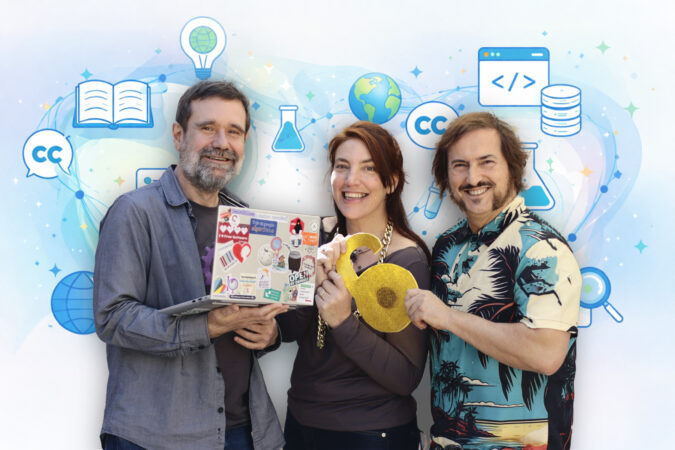

Social Networks in Education and Research
Description
This MOOC explores the potential of social media to transform teaching and research, starting with building a coherent, secure, and professional academic digital identity. Throughout the course, you will learn to manage your online presence, curate content, protect your privacy, apply netiquette, and optimize LinkedIn as a professional showcase. Strategies for creating learning communities, designing innovative teaching experiences, and evaluating their educational impact are analyzed. From a research perspective, methods for disseminating scientific results through social networks—both academic and general—are addressed, as well as how to use alternative metrics and plan effective communication. Tools for creating digital content, automating processes, and measuring results are also provided. All of this aims to expand your digital presence, share experiences, foster collaborations, and empower your students as digitally competent citizens. If you teach, conduct research, or combine both, this course is especially designed for you.
What you will learn
The MOOC "Social Networks in Education and Research" is designed to help teachers, researchers, and future professionals strategically integrate social networks into their educational and research practices. The course covers:
- Building a coherent and professional academic digital identity.
- The pedagogical use of social networks.
- Scientific dissemination in digital environments.
- The use of technological tools such as artificial intelligence, web analytics and multimedia editors to support the designed strategies.
The goal is for participants to be able to manage their online presence securely, communicate knowledge effectively, and develop innovative learning communities.
Requirements
- They are teachers at any educational level (early childhood education, primary, secondary, vocational training, university) or trainers in academies, technical schools, private centers or non-formal teaching environments, and they have their corresponding pedagogical and didactic training or are in the process of acquiring it.
- They are studying Education, Pedagogy, Didactics or similar disciplines, and seek to complement their training with practical skills in the strategic use of social networks for educational and research purposes.
- They participate in academic research processes, whether from a master's or doctoral program, and wish to improve their scientific visibility, communicate results and establish collaborative networks through digital platforms.
- They are part of the university faculty or are institutionally linked to educational projects, teaching innovation or knowledge transfer.
- They come from any area of knowledge, whether it be exact sciences, social sciences, humanities, engineering, health or others, and seek to incorporate digital tools to enhance their teaching or research work.
Faculty
Oriol Borrás Gené
King Juan Carlos University
I am a tenured lecturer at Rey Juan Carlos University in the Higher Technical School of Computer Engineering and the Educational Technologies Coordinator at the CIED (Center for Educational Research and Development) of URJC. I am a member of the LITE research group, where I conduct my scientific research focused on educational technologies. My research interests include the use of social networks in education, digital identity, personal learning environments, gamification and serious games, online training and MOOCs, and educational computing. I won first prize in the MiriadaX competition in 2014 and 2019 for the MOOCs "Application of Social Networks to Education" and "Empower Yourself with Social Networks.".
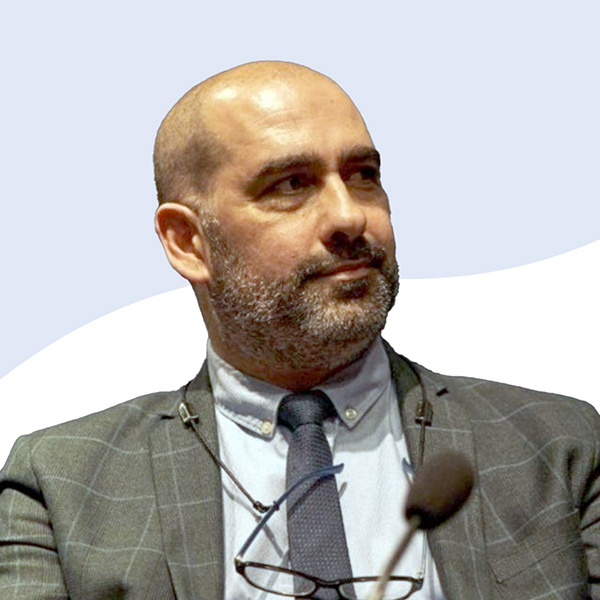
Antonio Julio López Galisteo
King Juan Carlos University
Full Professor at Rey Juan Carlos University and PhD in Engineering from the same university (2007), with Extraordinary Doctoral Award (Materials Science and Metallurgical Engineering). Materials Engineer from Rey Juan Carlos University (2003), with Extraordinary End-of-Degree Award, graduating class of 2002-2003. Certificate of Pedagogical Aptitude from Complutense University of Madrid (1999). Bachelor of Science in Chemistry from Complutense University of Madrid, specializing in Physical Chemistry (1998). He is currently the Director of the Master's Degree in Teacher Training at Rey Juan Carlos University and has served as Deputy Vice-Rector for Institutional Training, Vice-Rector for Teacher Training and Teaching Innovation, and Vice-Rector for Academic Affairs and Teacher Training at Rey Juan Carlos University. Director of the Rey Juan Carlos University micro-credential in "Artificial Intelligence in Education.".
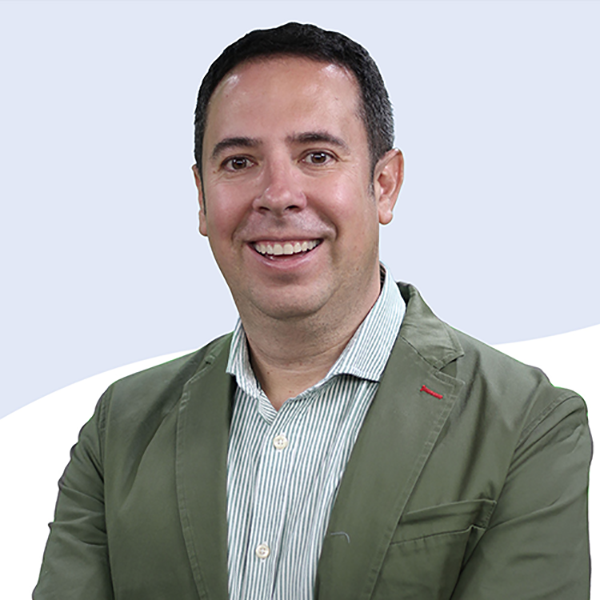
David Carabantes Alarcón
Complutense University of Madrid
Professor at the Complutense University of Madrid (UCM), PhD in Preventive Medicine and Public Health and History of Science, Specialist in Research Management and Knowledge Transfer, Master's in New Technologies Applied to Education, and Bachelor's in Documentation. Coordinator of the UCM Virtual Campus. Responsible for the MiríadaX platform's Massive Open Online Course (MOOC) on Open Scientific Information Management.

José Ignacio Pichardo Galán
Complutense University of Madrid
Full Professor of Social Anthropology at the Complutense University of Madrid. He directs the research group “Anthropology, Diversity, and Coexistence” and has conducted and published numerous studies on sexual and family diversity, masculinities, and the situation of gay, lesbian, bisexual, and transgender people in educational and work settings. He coordinated the European project “ADIM - Advancing in LGBT Diversity Management in the Public and Private Sector” at the Complutense University of Madrid. He coordinates the course “Interactive Tools for Collaborative Learning” within the Complutense University of Madrid's faculty development program.
Frequently Asked Questions
What type of audience might be interested in taking the MOOC?
- Teachers at any educational level:
- Professionals who teach in early childhood education, primary, secondary, vocational training or university.
- Teachers interested in improving their digital skills and integrating social networks as innovative pedagogical tools.
- Non-formal education trainers:
- Professionals who work in academies, technical schools, private centers or continuing education programs outside the formal education system.
- Interested in using social media to teach, communicate knowledge, and create learning communities.
- Future teachers and university students:
- Students of Degrees in Education, Pedagogy, Didactics, Teacher Training or other educational disciplines.
- Students who wish to develop their academic digital identity and explore new forms of digital teaching.
- Researchers and staff involved in scientific projects:
- Active researchers, as well as master's or doctoral students, interested in disseminating scientific results through academic and general social networks.
- People who seek to increase the visibility of their scientific work and learn to measure its impact using alternative metrics.
- University faculty and experts in educational innovation:
- University professors who want to improve their digital presence, manage their academic reputation, and participate in scientific collaboration networks.
- Those responsible for educational innovation projects and knowledge transfer.
- Anyone interested in educational and scientific communication:
- Professionals from other fields who wish to learn how to strategically use social media for educational and research purposes.
- People seeking to acquire practical skills in digital identity management, content creation, and ethical use of digital resources.
What am I going to learn?
The MOOC "Social Networks in Education and Research" is designed to help teachers, researchers, and future professionals strategically integrate social networks into their educational and research practices. Throughout the course, participants will learn to build a coherent and professional academic digital identity, use social networks for pedagogical purposes, disseminate scientific knowledge in digital environments, and use technological tools such as artificial intelligence, web analytics, and multimedia editors to support their strategies. The goal is for participants to be able to manage their online presence securely, communicate knowledge effectively, and develop innovative learning communities.
What can it be used for?
The MOOC "Social Networks in Education and Research" is designed to help teachers, researchers, and future professionals leverage the potential of social networks in their respective fields, with a practical and applied approach. Throughout the course, you will learn to build and manage a professional academic digital identity, using tools like LinkedIn to enhance your visibility and networking. You will also discover how to integrate social networks into teaching to create innovative learning communities, as well as how to design effective educational activities that improve the teaching and learning process. Furthermore, the course addresses the strategic use of these platforms in scientific research, including the dissemination of results, the use of alternative metrics, and the planning of effective communication strategies. The course also offers practical training in digital and technological tools such as artificial intelligence, multimedia editors, web analytics, and SEO techniques, all under ethical, secure, and responsible criteria. The ultimate goal is for you to be able to showcase your academic work, optimize your online presence, and develop key skills to adapt to new educational and research environments in an increasingly digital world.
What certification do I get if I complete it?
You can download your MOOC completion certificate for free once you have completed all the required course activities. The certificate will confirm your successful completion of the MOOC and will include the total number of hours.
How can I register?
To enroll in this course, simply log in or create your account and then click on the Start.
Which browsers are compatible with a URJC MOOC?
Current versions of Chrome, Firefox, Safari, or Internet Explorer version 9 or higher.
What happens if I have to drop out of a MOOC? Will I be able to re-enroll in a future edition of the same MOOC and/or another MOOC in the future?
Enrollment and participation in a URJC MOOC is free. There are absolutely no academic penalties for dropping out. You can enroll in the same MOOC and/or others (as long as they are still being offered) at a later time.
When does my MOOC start and end?
This MOOC is designed to be self-paced. You don't need to start at a specific time, although a learning pace of one topic per week is recommended.
How do I pass the course?
At the end of each module you will be assessed with a test on the basic concepts learned.
RAC credit validation
If you are an undergraduate student at Rey Juan Carlos University, you must register for the course using your university account (@alumnos.urjc.es) to receive RAC credits upon successful completion. Credits will not be awarded to students who completed the course using an account other than their URJC account or who are not currently enrolled in an undergraduate degree program.
🙋 You won't need to request the recognition, as it will appear automatically.
- 4 Sections
- 43 Lessons
- 28 Hours
- 1. Academic digital identity12
- 1.1Learning guide
- 1.2Contextualizing the digital environment
- 1.3Content curation
- 1.4Privacy
- 1.5Digital security
- 1.6Netiquette
- 1.7What is digital identity
- 1.8Academic digital identity
- 1.9Managing our digital identity
- 1.10LinkedIn as a network of professional opportunities
- 1.11Optimizing our LinkedIn profile
- 1.12Exam
- 2. Social networks in education12
- 2.1Learning guide
- 2.2Definition of social networks
- 2.3Virtual learning communities
- 2.4Characteristics of social networks and educational strategies
- 2.5Criteria for choosing social networks as virtual learning communities
- 2.6Advantages and disadvantages
- 2.7Assessment
- 2.8Designing an activity using social media
- 2.9Final recommendations
- 2.10Examples
- 2.11Exam
- 2.12Additional material
- 3. Social networks in education8
- 4. Support tools11
- 4.1Learning guide
- 4.2Creation of graphic content
- 4.3Audiovisual content production
- 4.4Interaction and participation tools
- 4.5Generative artificial intelligence
- 4.6Other solutions
- 4.7Automation
- 4.8How to measure success: web analytics
- 4.9How to measure success: KPIs, SEO and keywords
- 4.10Beware of copyright issues
- 4.11Exam

Courses that might interest you
Don't miss a thing
Subscribe to the newsletter
Receive information about new courses and news