
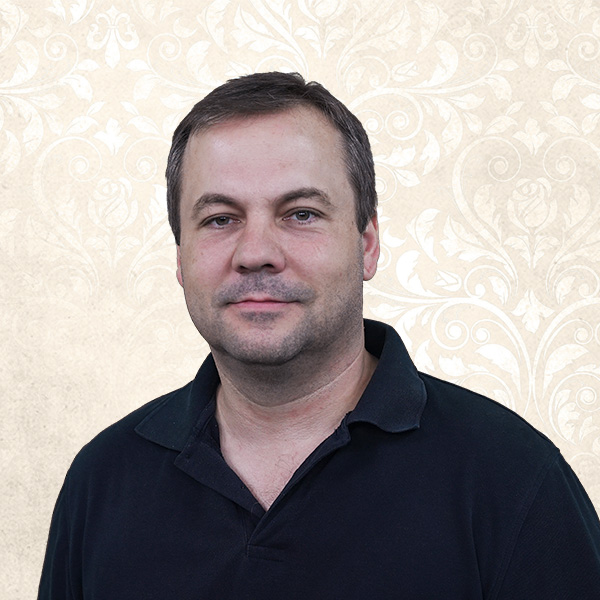
José Eloy Hortal Muñoz
Rey Juan Carlos University
Professor of Modern History at URJC since 2009, he previously worked as a tour guide for Patrimonio Nacional (National Heritage), as a secondary school teacher, and as a professor at the TAI University School. For two years, he was the Teaching Innovation Advisor for online studies at URJC.
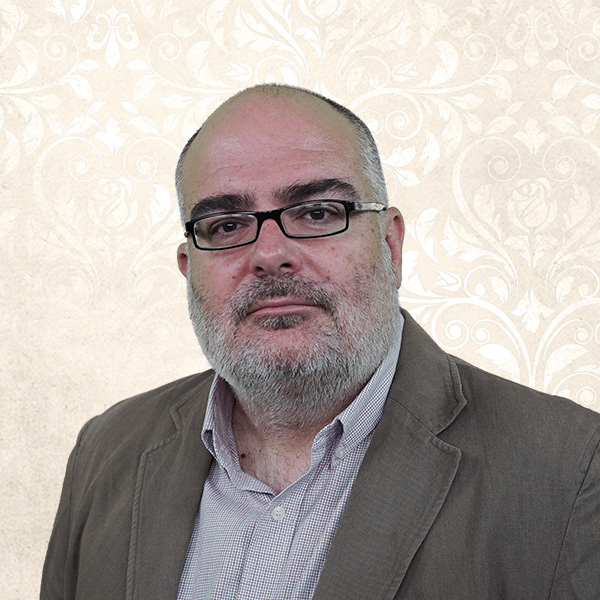
Felix Labrador Arroyo
Rey Juan Carlos University
Full Professor of Modern History at URJC and leading researcher at the Institute of Educational Sciences and the University Institute "The Court in Europe" at UAM. He directs several research projects funded by the Ministry of Economy and Competitiveness and the Community of Madrid, focusing on the evolution of the court, ceremonial etiquette, and the Royal Sites of the Hispanic Monarchy.
Gijs Versteegen
Rey Juan Carlos University
He holds a degree in History from Utrecht University and a doctorate from the Autonomous University of Madrid. He specializes in the political culture of the Early Modern period. Since 2010, he has been a professor at Rey Juan Carlos University, where he is involved in various research projects on the Royal Sites.
Isabel María Pascual Sastre
Rey Juan Carlos University
She holds a Bachelor's degree (UCM, 1988) and a PhD in History (UCM, 1995). After fifteen years at the Spanish National Research Council (CSIC), she is currently a tenured professor at the Rey Juan Carlos University of Madrid, where she has worked for twelve years as a lecturer and principal researcher in Contemporary History.
Fernando Javier Santa Cecilia Mateos
Autonomous University of Madrid
He holds a degree in Geography from the Autonomous University of Madrid (UAM) and a PhD in Geography from the same university. He is currently an Assistant Professor in the Department of Specific Didactics at the Faculty of Education and Teacher Training at the UAM. His research has focused on various lines of inquiry related to the study of Geography and Teacher Education and Training.
Javier de Esteban Curiel
Rey Juan Carlos University
He holds a PhD with European Distinction and an Extraordinary Prize in Social Science Research Methodologies from the Complutense University of Madrid and a Master of Arts in European Tourism Management from Bournemouth University (United Kingdom). He is currently a Full Professor at Rey Juan Carlos University and a Visiting Researcher at several international universities.
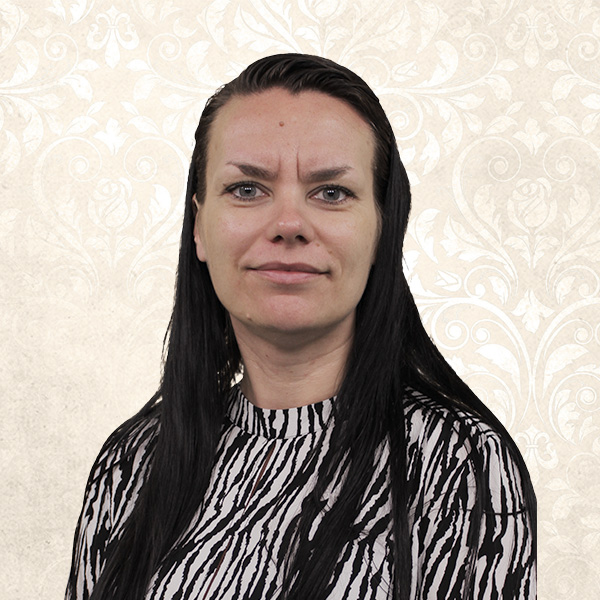
Arta Antonovica
Rey Juan Carlos University
She holds a PhD in Communication and Marketing from Rey Juan Carlos University in Madrid and a Master of Arts from the RISEBA School of Economics and Business Administration in Riga, Latvia. She is currently a tenured lecturer at Rey Juan Carlos University and a visiting researcher at several international universities.
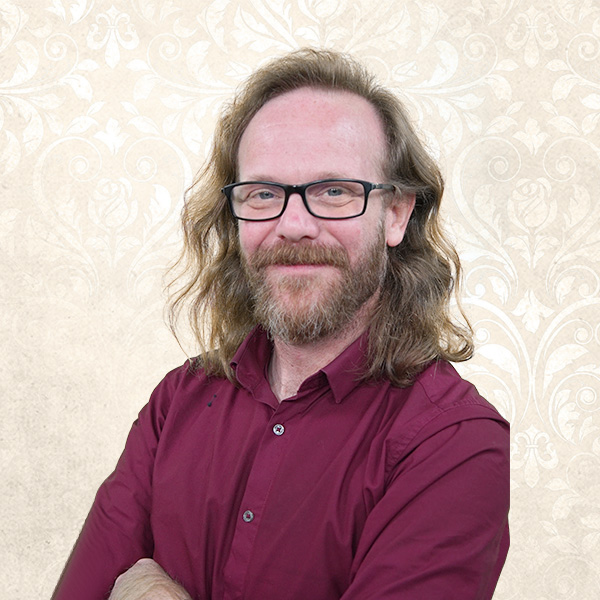
Pablo Roger Prieto Dávila
Rey Juan Carlos University
Architect (UPM, 2003) and PhD in Communication Sciences (URJC, 2009). He is currently a tenured lecturer at Rey Juan Carlos University, where he has worked for 14 years in graphic communication, graphic user interfaces and user experience, both in teaching and research.
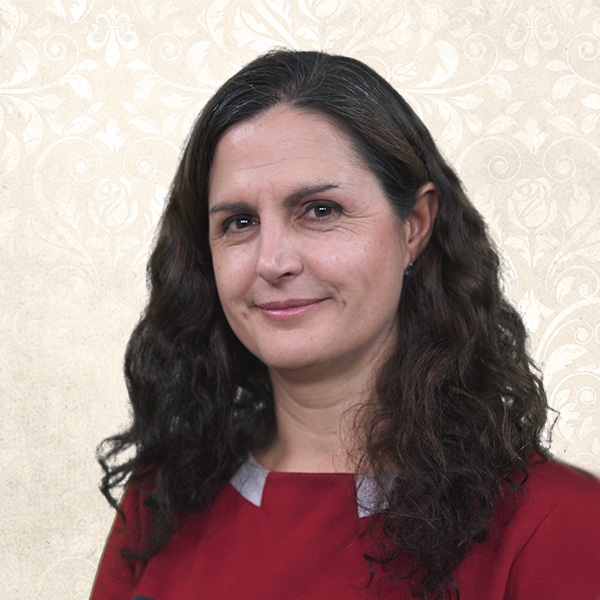
María Luisa Walliser Martín
Rey Juan Carlos University
An architect with a Master's degree in Restoration and Conservation of Architectural Heritage from ETSAM (UPM), where she is currently pursuing her doctorate. Her professional and research work lies at the intersection of architecture, heritage, and design, fields in which she has taught at URJC since 2008.
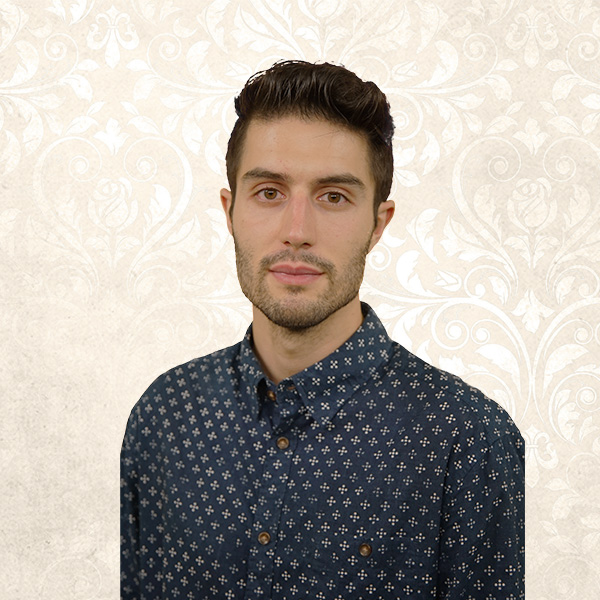
Jorge Pajarín Domínguez
Rey Juan Carlos University
He holds a double degree in Journalism and History (URJC) and Master's degrees in Teacher Training and Spanish Literature (UCM). He is currently a doctoral candidate and visiting professor at URJC. His research focuses on the study of the Royal Sites and the Spanish Court in the 19th century and the Russian Romanov Court.
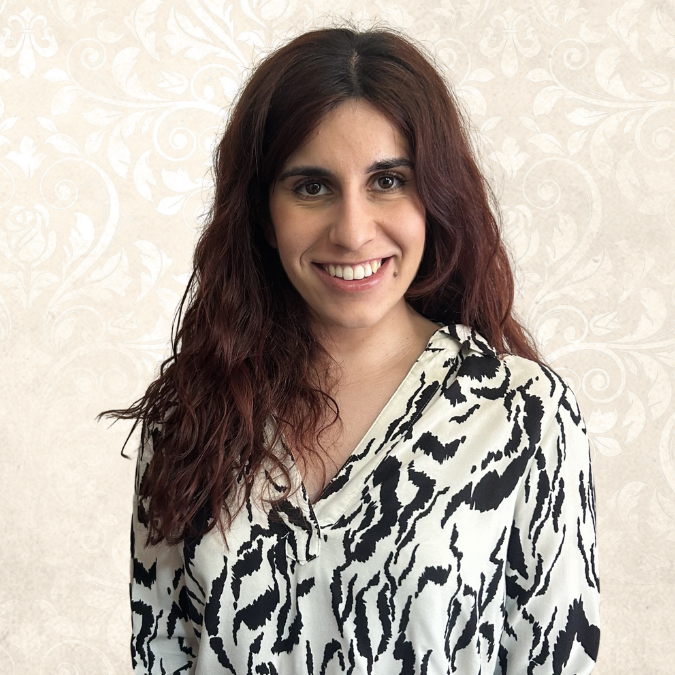
Ana Galisteo Chico
Rey Juan Carlos University
She holds a degree in History and Tourism (URJC) and a Master's degree in Teacher Training (URJC). She is currently a doctoral candidate at URJC with a CAM 2023 FPI contract. Her research focuses on the study of royal heritage and the changes it underwent during the reign of Charles IV.
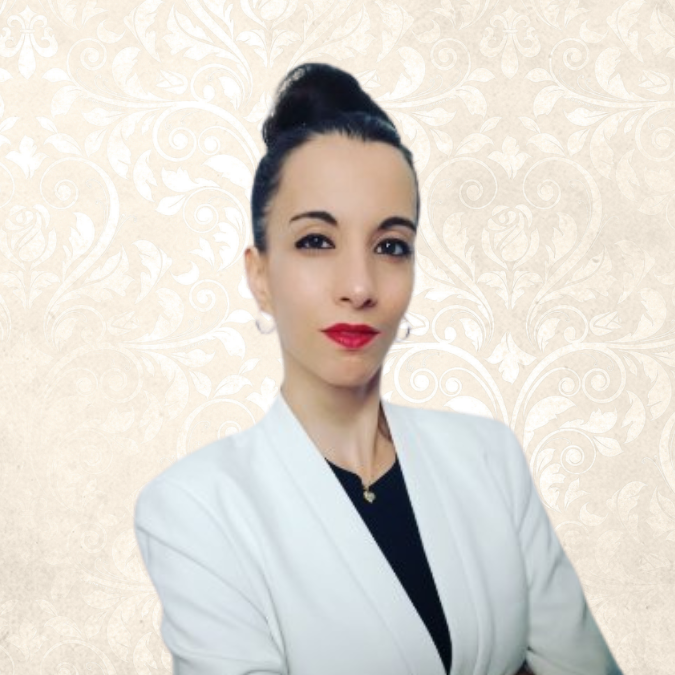
Soraya Oronoz Rodríguez
Rey Juan Carlos University
With a PhD in Humanities, Language and Culture, and a degree in Education from URJC, she is an interpreter and environmental educator certified by the Government of Aragon. Her research focuses on heritage and values education, and she has numerous publications and contributions to national and international conferences.
- 5 Sections
- 71 Lessons
- 30 Hours
- 1. Royal Sites as a professional resource for history (and other humanities)13
- 1.1The evolution of the Royal Sites: their role in the construction of Europe
- 1.2The constellation of the Royal Sites
- 1.3Versailles, by Louis XIII à la Révolution
- 1.4A real story. Siti reali and noble palazzi of Torino
- 1.5The Country House
- 1.6The ceremonial Madrid of Philip IV
- 1.7The Royal Site of El Pardo as an example of the historical evolution of Royal Sites
- 1.8The Royal Site of El Pardo
- 1.9Big game hunting and driven hunts in the time of Philip IV
- 1.10Interview with José Luis Sancho, researcher at Patrimonio Nacional
- 1.11Number of visits to the Royal Sites, according to data from National Heritage (2012-2016)
- 1.12Exam
- 1.13Additional material
- 2. Royal Sites as a professional resource for geography14
- 2.1Reading the landscape of the Royal Site of Monte de El Pardo
- 2.2A mountain, a river and a palace: main elements of the El Pardo Landscape
- 2.3A round hill composed of 17 quarters and a day palace
- 2.4Block diagram of the Royal Site of Monte de El Pardo
- 2.5From the high peaks of the Guadarrama mountains to the city of Madrid
- 2.6A mountain managed for hunting and agriculture
- 2.7Discovering the Royal Site of Monte de El Pardo
- 2.8Educational itinerary through the Monte de El Pardo: Discovering the Royal Site of Monte de El Pardo
- 2.9The Grove of Rome
- 2.10The Leiria Pine Forest
- 2.11Shipbuilding and sustainability in the Iberian Peninsula (15th-19th centuries)
- 2.12Another element that has an impact on the landscape: the history of the Aranjuez railway
- 2.13Exam
- 2.14Additional material
- 3. Royal Sites as Educational Tools15
- 3.1Royal Sites as educational tools for heritage knowledge
- 3.2Real-world sites: ideal elements for competency-based learning
- 3.3LOMLOE
- 3.4The National Education and Heritage Plan
- 3.5Gamification: El Pardo in Minecraft
- 3.6Recreation of the Palace of Aranjuez in Minecraft
- 3.7The benefits of playful learning: Gamification
- 3.8Instructions for the game Royal Sites
- 3.9The Prince's Little House at the Royal Site of El Pardo
- 3.10History of El Pardo in a nutshell
- 3.11The Bear and the Newts: A Story of Defending Heritage Against an Amusement Park
- 3.12Benefits of audiovisual material in education
- 3.13Design of educational activities for heritage and values education through Royal Sites
- 3.14Exam
- 3.15Additional material
- 4. Royal Sites as tourism products: marketing applications15
- 4.1The marketing of the Royal Sites for tourism through marketing techniques
- 4.2The 4Ps of tourism marketing
- 4.3Commercial communication of Royal Sites as a key element in attracting visitors
- 4.4Processes for tourism decision-making among visitors to Royal Sites
- 4.5Internal and external variables that influence tourists throughout the decision-making process for choosing products and services at Royal Sites
- 4.6The search for “pre-purchase” information versus “ongoing” or permanent information
- 4.7Interview about cultural tourism marketing with Ms. Elena Benarroch Vila, Marketing Manager of the Thyssen Museum
- 4.8Additional marketing strategies for tourism products such as Royal Sites
- 4.9Decision-making regarding consumers and tourism products: Royal Sites
- 4.10The palatial Aranjuez
- 4.11The Royal Factories
- 4.12Heritage as a tourist resource. Dissemination and enhancement of Royal Sites through the tourist experience
- 4.13Heritage as a tourist resource. Dissemination and revaluation of the Royal Sites
- 4.14Exam
- 4.15Additional material
- 5. Royal Sites as a professional resource for architecture and new technologies: visualization of heritage and its dissemination14
- 5.1Royal Sites through their architecture: information hubs and witnesses of an era
- 5.2The Architecture of Royal Sites as a Concentrator of Knowledge
- 5.3Architecture and everyday life
- 5.4Virtual reality, mixed reality, and augmented reality
- 5.5Products and applications for VR, MR and AR
- 5.6Interview with David Ruiz Torres
- 5.7Historic architecture of El Pardo through Augmented Reality
- 5.8Enhanced tour of El Pardo in the 18th century
- 5.9Valsaín Palace 3D Reconstruction
- 5.10La Isabela-Sacedón 3D
- 5.11Virtual reconstruction of the Royal Site of La Isabela. Church of Isidro González Velázquez
- 5.12Coudenberg Palace 3D
- 5.13Exam
- 5.14Additional material