Beatriz Álvarez Tardío
Rey Juan Carlos University
PhD in Philippine-Hispanic Literature from the University of the Philippines (2004). Professor at URJC. Author of editions that recover Philippine-Hispanic classics: Gurrea (2009) and Laygo (2015). Curator of the exhibition “Na linia secreto del horizonte. El legado de Filipinas al mundo hispánico: la literatura hispanofilipina” (Instituto Cervantes, 2021).
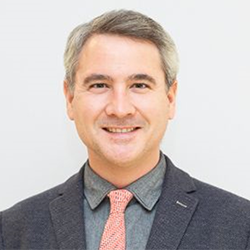
Guillermo Laín Corona
National University of Distance Education
He holds a PhD in Spanish Literature (2009) from the University of Málaga and a PhD in Hispanic Studies from University College London. Since 2016, he has been a professor in the Department of Spanish Literature and Literary Theory at the National University of Distance Education (UNED).
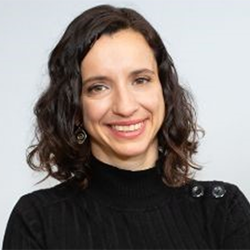
Clara I. Martínez Cantón
National University of Distance Education
Full Professor at the National University of Distance Education (UNED). Her research interests are related to metrics, poetry, and Digital Humanities, especially regarding the computational treatment of metrical and stylistic concepts.
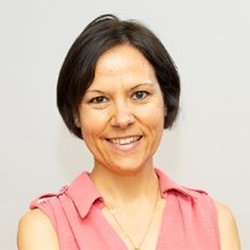
María D. Martos Pérez
National University of Distance Education
Full Professor of Spanish Literature at the National University of Distance Education (UNED), Madrid. Her preferred line of research is the poetry of the Golden Age and the writing of female authors in the early Modern Age, which she studies from the perspectives of gender criticism, literary sociology, and discourse analysis.
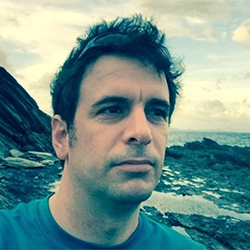
Jorge Mojarro
University of Santo Tomás
Professor of Literature at the University of Santo Tomás. His research areas include the history of the book in the Philippines, text editing, and Spanish-Philippine literature (colonial and modern), with a particular focus on historiography and travelogues. He is the author of articles, critical editions, and the editor of several books.
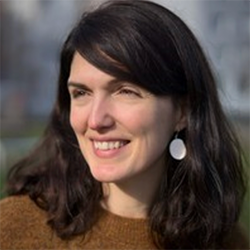
Rocío Ortuño Casanova
University of Alcalá
María Zambrano is a researcher at the University of Alcalá and a professor at the University of Antwerp, where she coordinates the DigiPhiLit project. She specializes in literary and cultural relations between the Philippines and the Spanish-speaking world and is interested in the digital humanities. She has coordinated the Philippine Literature in Spanish Portal of the Miguel de Cervantes Virtual Library.
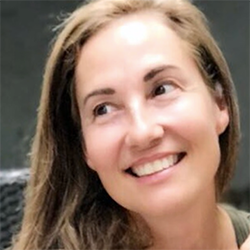
Emmanuelle Sinardet
Paris Nanterre University
Professor of Latin American and Philippine History and Cultural Studies at Paris Nanterre University since 2007. She directs the Center for Ecuadorian Studies within the CRIIA research laboratory, which she also directs. Her research focuses on nationalisms and national imaginaries, cultural policies, educational policies, literatures, and collective identities.
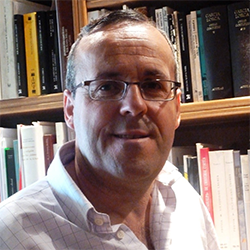
Miguel Zugasti
University of Navarra
Professor at the University of Navarra. Specialist in 16th-18th century literature, he focuses on Hispanic literature, both in its peninsular (Spanish) and overseas (America and the Philippines) aspects. Author of more than two hundred academic publications.
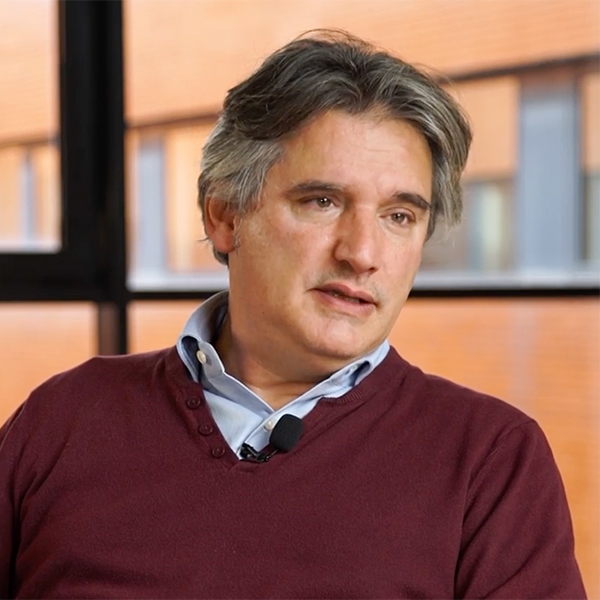
Axel Gasquet
University of Clermont-Auverne
Professor of Hispanic American literature and civilization at the University of Clermont-Auverne and researcher at the Institut d'Histoires des Représentations et des Idées dans les Modernités (CNRS), France. He has produced critical editions of, among others, Benigno del Río's Filipino Tales and José Rizal's Noli me tangere (Classiques Garnier, 2019).
Diana Villanueva Romero
University of Extremadura
She is a tenured lecturer in the Department of English Philology at the University of Extremadura. She received her PhD in American Studies from the University of Alcalá in 2015. Her field of specialization is Anglophone environmental literature. Since 2018, she has been interested in Philippine literature from the North American colonial period.
Michael M. Coroza
Ateneo de Manila University
Full Professor at Ateneo de Manila University. He has served as Director of the Filipino Department in its Faculty of Humanities. He holds a PhD in Filipino (Language and Translation) from the University of the Philippines. In 2019, he received the Champion of Language Award in Literature and Translation from the Philippine Language Commission.
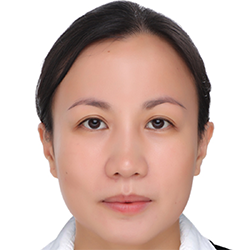
Maria Luisa P. Young
Ateneo de Manila University
Professor of Spanish in the Department of Modern Languages at Ateneo de Manila University since 2001. Her research focuses on the cultural component in the teaching of Spanish, and she translates works of Spanish-Philippine literature from Spanish to English and Filipino.
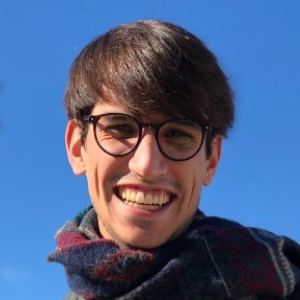
Victor Felipe Acevedo Lopez
Rey Juan Carlos University
PhD in Humanities: Language and Culture from Rey Juan Carlos University (2022). Since 2016, he has worked at URJC as a professor and researcher in the area of General Linguistics. His main lines of research are related to linguistic historiography and the history of Spanish missionary linguistics.
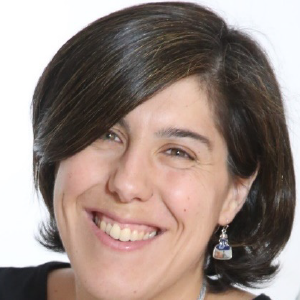
Laura Arroyo Martínez
Rey Juan Carlos University
She holds a degree in Hispanic Philology (UCM, 2008). She was a predoctoral research fellow (FPU) from 2010 to 2013. She received the Extraordinary Doctoral Prize in Literary and Intercultural Studies (UCM, 2013). She is currently a professor in the Department of Arts and Humanities at Rey Juan Carlos University.
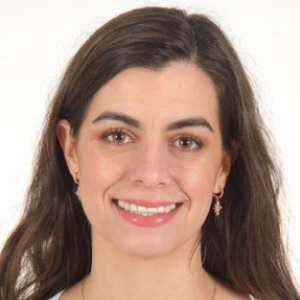
Macarena Gil de la Puerta
Rey Juan Carlos University
She holds a degree in Hispanic Studies (UAM 2015) and a PhD in Humanities: Language and Culture (URJC 2022). Since 2017, she has been a professor at Rey Juan Carlos University. Her main research interests are syntax and linguistic historiography.
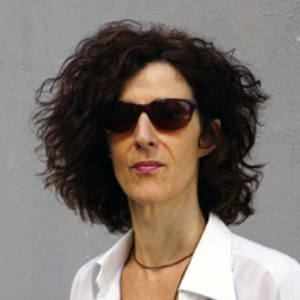
Sally Gutiérrez Dewar
University of Salamanca
Visual artist, researcher, and lecturer. She holds a degree in Fine Arts (UCM), a master's degree in Media Studies (New School University, New York), and a doctorate in Arts and Humanities (UM, 2020). She is currently developing several artistic projects and teaches at the Faculty of Fine Arts of the University of Salamanca and at the European University.
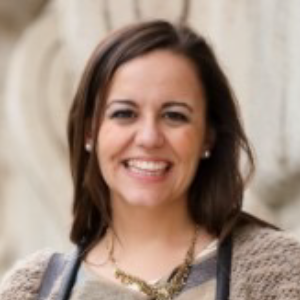
Cristina V. Herranz Llácer
Rey Juan Carlos University
She holds a degree in Psychology, a Master's degree in Teacher Training and in Language Sciences, and a PhD from the International Doctoral School. In 2012-2013, she joined the General Linguistics Department at URJC. Her main research interests are lexicography and sociolinguistics.
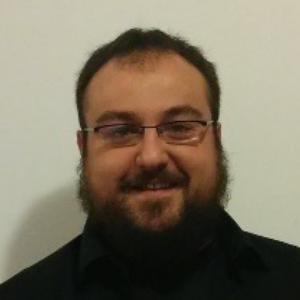
Antonio Huertas Morales
Rey Juan Carlos University
He holds a PhD in Spanish Literature from the University of Valencia. He has taught at the University of Zagreb and the University of Tallinn and is currently a professor at the Rey Juan Carlos University, where he teaches in the Master's Program in Teacher Training.
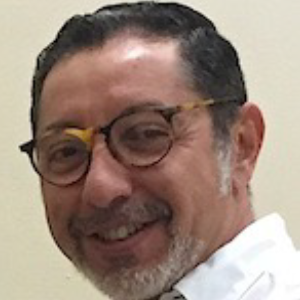
Mario Roger Quijano Axle
Veracruzana University
Bachelor's and Master's degrees in Music from the Universidad Veracruzana (Xalapa, Mexico). PhD in Musicology from the Complutense University of Madrid (Spain). Professor at the Universidad Veracruzana. He has participated in academic events in Mexico, the United States, Spain, Belgium, Poland, Norway, France, Italy, the Philippines, and South Korea. Interests: Mexican and Spanish music, opera, and cultural exchange.
- 5 Sections
- 60 Lessons
- 25 Hours
- 1. Colonial Spanish-Philippine literature12
- 1.1Learning guide
- 1.2The return journey: features and peculiarities
- 1.3The Boxer Codex, 159?
- 1.4Events in the Philippine Islands
- 1.5Colonial literary genres in the Philippines
- 1.6The accounts of events
- 1.7Missionary linguistics
- 1.8The theater
- 1.9The festivals and their books
- 1.10The Envious One's Interlude
- 1.11Assessment
- 1.12Additional material
- 2. The independence of genius: 19th-century literature12
- 2.1Learning guide
- 2.2Towards Philippine Independence
- 2.3From Baroque to Modern Globalization
- 2.4The Philippine Library
- 2.5Philippines 1825: Between festivities and pamphlets
- 2.6From Clavería to Peláez: theater and speeches
- 2.7"Beloved Land": The Literary Genres of the End of the Century
- 2.8Philippines 1887: “near China, province of Japan, north of Siberia
- 2.9"The enigma that the Philippines holds," said Pardo Bazán
- 2.10The independence of genius
- 2.11Assessment
- 2.12Additional material
- 3. The golden age of Hispanic-Philippine literature, 1902-194212
- 3.1Learning guide
- 3.2The golden age of Spanish-Philippine literature
- 3.3The Zóbel Prize
- 3.4The Philippine Academy of the Spanish Language
- 3.5New imaginaries?
- 3.6Criticizing those who imitate Americans
- 3.7Idealizing Spain to criticize the United States
- 3.8Foundational texts
- 3.9A family drama by Claro M. Recto
- 3.10The archetype of the corrupted dalaga
- 3.11Assessment
- 3.12Additional material
- 4. Contemporary Hispanic-Philippine Literature, 1945-202213
- 4.1Learning guide
- 4.2Historical and literary overview from 1945 to 2022
- 4.3Writing in Spanish after 1945
- 4.4Why are Filipino texts so rare?
- 4.5Literary genres
- 4.6Themes in Philippine poetry from 1945 onwards
- 4.7Genres of contemporary Hispanic-Philippine literature
- 4.8Themes in contemporary Hispanic-Philippine literature
- 4.9Folklore and the revision of history
- 4.10Literature about World War II
- 4.111945-2022
- 4.12Assessment
- 4.13Additional material
- 5. Hispanic-Philippine Literature through the Digital Humanities11
- 5.1Learning guide
- 5.2Digital resources
- 5.3Optical character recognition
- 5.4Extract text from images
- 5.5Corpus of literary texts
- 5.6Literary texts with Voyant Tools
- 5.7Other analysis possibilities with Voyant Tools
- 5.8From marginalia to digital semantic annotation
- 5.9Places and entities in texts with Recogito
- 5.10Projects with semantic annotation using Recogito
- 5.11Assessment