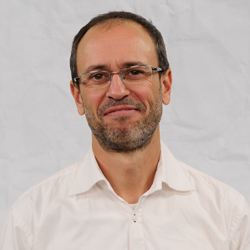
Fernando Tucho Fernández
Rey Juan Carlos University
With a PhD in Communication, he is a tenured professor of Journalism at Rey Juan Carlos University in Madrid. He is a member of the ImpacTIC research group and the creator of the Ecology and Media , which studies the environmental impact of ICTs. He is also the President of Aire Comunicación – the Association of Media Educators. The environmental impact of ICTs is one of his main lines of research, resulting in the publication of several academic articles on the subject, presentations at national and international scientific conferences, and various outreach activities.
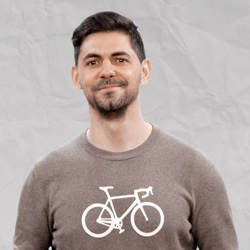
Javier González de Eusebio
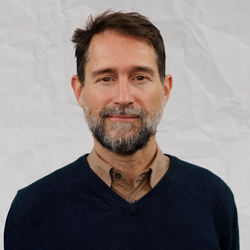
José María García de Madariaga
Rey Juan Carlos University
He holds a PhD in Information Sciences from the Complutense University of Madrid. He is currently a tenured professor at the Rey Juan Carlos University of Madrid (URJC), where he has taught various courses related to digital technologies in the Faculty of Communication Sciences since November 2002. His research has focused on the influence of digitization on social communication processes in general, and on journalism and citizen participation in particular. He also has journalistic and outreach experience in various fields of new information and communication technologies. He is a member of the ImpacTIC research group.
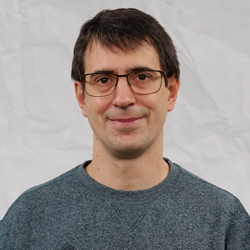
Miguel Vicente-Mariño
University of Valladolid
Professor and Director of the Department of Sociology and Social Work at the University of Valladolid. He holds a PhD in Audiovisual Communication from the Autonomous University of Barcelona, a Bachelor's degree in Sociology from the same university, and a Bachelor's degree in Journalism from the University of Santiago de Compostela. Since 2015, he has been the Deputy Director of the Working Group on the History of Communication Research at the AE-IC (Spanish Association for Communication Research). He has numerous publications and a distinguished academic and research career. He is a member of the ImpacTIC research collective.
- 5 Sections
- 55 Lessons
- 25 Hours
- 1. The origin of ICT devices: planned obsolescence and mining of natural resources11
- 1.1Obsolescence in ICT devices
- 1.2Types of obsolescence
- 1.3What do we talk about when we talk about sustainability?
- 1.4Minerals and ICT?
- 1.5I have dirt on my phone!
- 1.6Mining to manufacture our devices: a dangerous activity
- 1.7How to fight planned obsolescence and the influx of blood minerals?
- 1.8Combating planned obsolescence and illegal mining of natural resources
- 1.9Allies for fairer technology
- 1.10Exam
- 1.11Additional material
- 2. Who manufactures our ICT devices?11
- 2.1The manufacturing of ICT devices (general overview)
- 2.2What's wrong with the electronics industry?
- 2.3Transforming our world: Sustainable Development Goals
- 2.4The environmental impact of ICT device manufacturing
- 2.5High toxicity and information concealment
- 2.6The rebound effect or Jevons' paradox
- 2.7Fighting for a fairer manufacturing industry. Interview with Electronics Watch
- 2.85 points for sustainable ICT consumption and a fair electronics industry
- 2.9Digital sufficiency: sustainable digitization
- 2.10Exam
- 2.11Additional material
- 3. Consuming ICT11
- 3.1The environmental impact of ICT consumption
- 3.2Doing the math: digital or analog?
- 3.3The impact of the network: some interesting facts
- 3.4This video is harmful to the environment
- 3.5A cloud of dust and smoke: data centers and artificial intelligence
- 3.6Not everything is fiction: sustainability in film
- 3.7How to implement sustainable consumption of ICT devices?
- 3.8Practices for sustainable ICT consumption
- 3.9Ten Commandments for Sustainable Cinema
- 3.10Exam
- 3.11Additional material
- 4. Electronic waste11
- 4.1Electronic waste
- 4.2The era of garbage
- 4.3Slow violence according to Rob Nixon
- 4.4Electronic waste recycling: formal and informal recycling methods
- 4.5The iceberg metaphor
- 4.6The health and environmental impact of illegal landfills
- 4.7General recommendations for combating electronic waste
- 4.8What to do with electronic waste?
- 4.9Good practices for sustainable ICT consumption: Circular economy?
- 4.10Exam
- 4.11Additional material
- 5. Education for digital sustainability: educational proposals to bring sustainability closer to the use of ICTs11
- 5.1Are you digitally competent?: The Common Framework for Digital Teaching Competence
- 5.2A critical digital citizenry
- 5.3Deconstructing imaginaries: a proposal for the analysis of a media text
- 5.4Analysis and evaluation of good practices
- 5.5Slow media: rethinking media
- 5.6Interview with Joan Ferres
- 5.7The importance of emotions in our relationship with screens and how to address it educationally
- 5.8Proposals for sustainable ICT consumption
- 5.9Exam
- 5.10Your Media Literacy Proposal
- 5.11Additional material