
Fundamental Course in Microeconomics
Description
The MOOC entitled “Fundamental Course in Microeconomics” is taught entirely online, with an open and massive character, and free of charge, lasting 12 weeks, and in it the behavior of private agents of the economy (consumers and companies), as well as the main existing market structures, such as perfect competition, monopoly, oligopoly and monopolistic competition.
Each student can learn at their own pace. Materials are provided, including PDF lessons, explanatory videos, solved exercises, and interactive video exercises. Assessment will consist of a quiz at the end of each module, as well as a comprehensive exam. This MOOC covers the fundamental microeconomic concepts necessary to interpret everyday events from a microeconomic perspective.
If you want to gain knowledge in the field of microeconomics and understand everyday economic events from the perspective of the behavior of different economic agents and the markets in which they interact, this is the course for you, sign up!
What you will learn
In this course you will learn about:
- Object of study of microeconomics
- Markets: Supply and Demand
- Consumer behavior
- The company: production and costs
- Perfect competition
- The monopoly
- Other forms of imperfect competition
Faculty
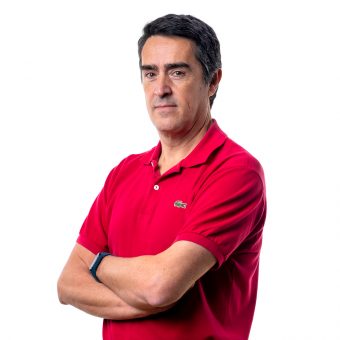
Juan Carlos Aguado Franco
King Juan Carlos University
Tenured Lecturer in the Department of Economic Analysis at Rey Juan Carlos University in Madrid. He holds a degree in Economics from the Autonomous University of Madrid (UAM), a Master of Science from the Agronomic Institute of Montpellier, France, and a PhD in Economics from Rey Juan Carlos University. Since 2002, he has been a professor at Rey Juan Carlos University, and previously taught for eight years at Carlos III University of Madrid, five years at Alfonso X "El Sabio" University, and one year at the Polytechnic University of Madrid. He has been a visiting professor at the University of Costa Rica and ORT University in Montevideo, Uruguay. He is the author of the books "Basic Lessons in Economics," "The Financial Management of Tourism Companies" (Paraninfo Publishers, Madrid), "Decision and Game Theory," "Fundamental Course in Microeconomics" (Delta Publications, Madrid), and "Understanding Microeconomics" (Pirámide, Madrid).
Frequently Asked Questions
What type of audience might be interested in taking the MOOC?
It can be a valuable complement to the microeconomic training of students in the first years of degrees such as Economics, Business Administration, etc., but it is aimed at anyone interested in understanding everyday economic events from the point of view of the behavior of different economic agents and the markets in which they interact.
What can it be used for?
What certification do I get if I complete it?
You will be able to obtain the MOOC completion certificate once you have completed all the required course activities. The certificate will confirm your successful completion of the MOOC and will include the total number of hours.
How can I register?
To enroll in this course, simply log in or create your account and then click on the Start.
Which browsers are compatible with a URJC MOOC?
Current versions of Chrome, Firefox, Safari, or Internet Explorer version 9 or higher.
What happens if I have to drop out of a MOOC? Will I be able to re-enroll in a future edition of the same MOOC and/or another MOOC in the future?
Enrollment and participation in a URJC MOOC is free. There are absolutely no academic penalties for dropping out. You can enroll in the same MOOC and/or others (as long as they are still being offered) at a later time.
When does my MOOC start and end?
This MOOC is designed to be self-paced. You don't need to start at a specific time, although a learning pace of one topic per week is recommended.
How do I pass the course?
At the end of each module you will be assessed with a test on the basic concepts learned.
RAC credit validation
If you are an undergraduate student at Rey Juan Carlos University, you must register for the course using your university account (@alumnos.urjc.es) to receive RAC credits upon successful completion. Credits will not be awarded to students who completed the course using an account other than their URJC account or who are not currently enrolled in an undergraduate degree program.
🙋 You won't need to request the recognition, as it will appear automatically.
- 7 Sections
- 40 Lessons
- 36 Hours
- 1. Object of study of microeconomics7
- 2. Markets: supply and demand6
- 3. Consumer behavior7
- 4. The company: production and costs5
- 5. Perfect competition5
- 6. The monopoly5
- 7. Other forms of imperfect competition5

Courses that might interest you
Don't miss a thing
Subscribe to the newsletter
Receive information about new courses and news