

She graduated in Mathematics from the Complutense University of Madrid (UCM) in 1996 and earned her PhD in Mathematics from the Carlos III University of Madrid (UC3M) in 2004. She is a tenured professor in the Department of Statistics and Operations Research. She participates in research projects at UC3M and URJC. She has completed the PhD program in Mathematical Engineering at UC3M. Her research interests focus on non-stationary time series, non-parametric inference, resampling techniques, and the analysis and development of prediction techniques for time series
About this course
Itinerary
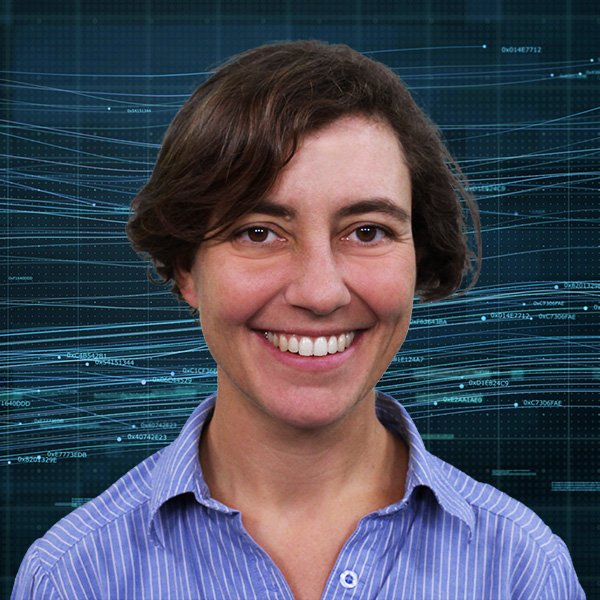
Clara Simón de Blas
Rey Juan Carlos University
Lecturer and coordinator of the Mathematics degree program at URJC. She previously worked as a project manager at Saint Louis University, Avon Cosmetics, ICA, and Bayes Forecast. She participates in research projects at UCM and URJC. She has collaborated with the University of Graz (Austria) and Berkeley (USA) as a postdoctoral researcher. Her current research interests include time series, management and efficiency of public organizations, statistical applications, social networks, and humanitarian logistics.

José Felipe Ortega Soto
Rey Juan Carlos University
Researcher and academic director of the Master's Program in Data Science at URJC. He has worked as a coordinator and researcher on more than 35 national and international projects. He has lectured at prestigious institutions such as Xerox PARC and the Cervantes Institute. His research focuses on massive online collaboration and the application of data science techniques and methods.
- 5 Sections
- 51 Lessons
- 20 Hours
Expand all sectionsCollapse all sections
- 1. Univariate Data Analysis and Visualization10
- 1.1Sample design
- 1.2The scale: types and selection criteria
- 1.3Database development
- 1.4Measures of centrality and variability
- 1.5Calculating measurements using computer tools
- 1.6Univariate data visualization
- 1.7Variable distribution pattern
- 1.8Classification of variables with tools
- 1.9Exam
- 1.10Additional content
- 2. Multivariate Data Analysis and Visualization11
- 2.1Relationship between quantitative variables: types and selection criteria
- 2.2Calculation of relational measures using computer tools
- 2.3Visualization of multivariate relationships using computer tools
- 2.4Relationship between qualitative variables: types and selection criteria
- 2.5Creating contingency tables using computer tools
- 2.6Calculation of relational measures using computer tools
- 2.7Data classification and reduction methods
- 2.8Selection criteria for exploratory tools for multivariate relationships
- 2.9Verification of assumptions for data classification and reduction methods using computer tools
- 2.10Exam
- 2.11Additional content
- 3. Econometric Techniques (Modeling and Prediction)9
- 3.1Concept, data and its handling, introduction to Gretl
- 3.2Simple Linear Regression Model: Elements, hypotheses, estimation
- 3.3Multiple Linear Regression Model
- 3.4Contrasts, diagnosis, prediction
- 3.5Economic Forecasting Techniques
- 3.6Analysis of a series with a trend
- 3.7Guidelines for evaluation
- 3.8Exam
- 3.9Additional content
- 4. Big Data: Concepts, Methods and Technologies11
- 4.1Introduction to Big Data Processing and Analysis
- 4.2Data Type Classification
- 4.3Big Data Project Development Cycle
- 4.4Data Processing Strategies
- 4.5Hybrid Architectures for Big Data
- 4.6Laboratory Analysis vs. Production Analysis
- 4.7Laboratory Analysis vs. Production Analysis
- 4.8The Apache Ecosystem of Hadoop
- 4.9Introduction to NoSQL Databases
- 4.10Exam
- 4.11Additional content
- 5 Trends in Data Analysis and Big Data10
- 5.1Data Mining / Machine Learning
- 5.2Risk Analysis and Quality Management
- 5.3Data Analysis and Visualization for Decision Making
- 5.4Methodologies for advanced modeling and prediction
- 5.5Univariate and Multivariate Modeling
- 5.6Debate on Trends in Big Data Analytics
- 5.7Cloud Computing and Big Data
- 5.8Applications of Big Data Analytics
- 5.9Exam
- 5.10Additional content